



PNN
New Delhi [India], December 19: Discussions around education in India often centre on metro cities and well-known private institutions. However, many meaningful changes are taking place in Tier-2 towns, where schools are reassessing how science and technology are taught. These schools may not have extensive infrastructure, but they increasingly recognise that textbook-led instruction alone does not prepare students for modern academic or professional demands.
As technology becomes a part of nearly every industry, schools outside major cities are looking for practical ways to introduce students to applied learning. Robotics, coding, electronics, and structured STEM activities are being adopted not as extras, but as core learning tools. School-based innovation labs are helping create environments where students work with concepts directly, rather than only reading about them.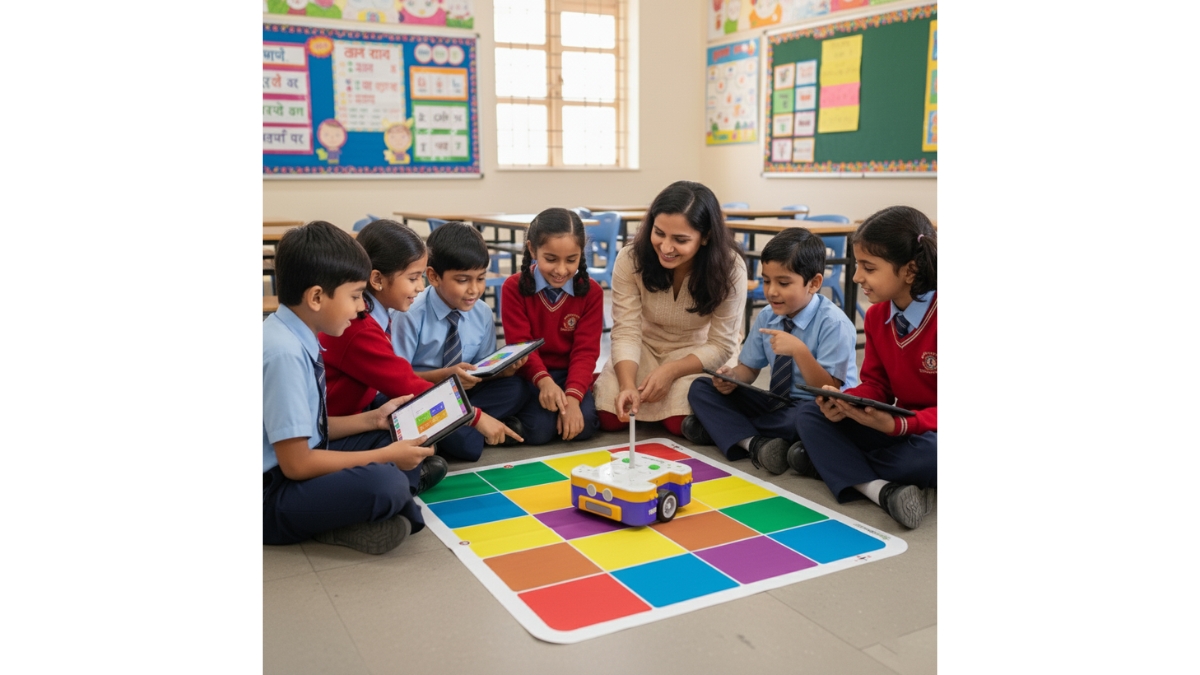
The Tier-2 Education Context
Tier-2 schools often operate under practical constraints. Student interest is high, but access to advanced tools, specialised training, and structured lab environments can be limited. Teaching still tends to prioritise theory, leaving little room for application-based learning.
Parents are also becoming more aware of this limitation. As children interact with technology daily, expectations from schools have changed. Families want education systems that explain how things work, not just how to answer exam questions. This has increased interest in STEM programs that fit within existing school schedules and resources.
Why Applied Learning Matters
When students assemble components, write basic code, or test simple mechanisms, learning becomes more concrete. Concepts from physics, mathematics, and logic are easier to understand when students can observe results directly. Errors are part of the process, allowing students to adjust and try again.
Educators consistently report higher engagement when lessons involve physical activity or experimentation. Students who struggle with abstract instruction often respond better when ideas are demonstrated through models or working systems. For Tier-2 schools, applied learning helps reduce dependence on rote methods and allows students to demonstrate understanding through action.
Creating Structured Learning Environments
Effective STEM education requires consistency. One-off workshops or isolated kits often fail to deliver lasting results. Schools that see progress typically use a structured approach that includes dedicated lab spaces, curriculum-linked activities, trained facilitators, and defined learning outcomes.
Turnkey innovation lab models allow schools to integrate robotics, coding, electronics, and basic automation into regular timetables. Students start with foundational concepts and gradually move to more complex builds and programs. Over time, this approach helps develop planning skills, logical reasoning, and teamwork.
RoboSpecies Technologies Pvt. Ltd. follows this structured model by setting up school-based innovation labs that include infrastructure, curriculum support, and facilitator training, allowing schools to run practical STEM programs as part of regular instruction rather than as extracurricular activities.
RobotriX Kits and Hands-On Skill Development
RoboSpecies Technologies Pvt. Ltd. uses its proprietary RobotriX Kits as a core part of lab-based learning. These kits are designed to support gradual skill development across different age groups. Students work with mechanical parts, sensors, and control elements to build functional models that align with their academic level.
Younger students focus on basic movement, structure, and mechanical principles. Older students work with more advanced assemblies that introduce electronics and automation. The kits are used within a guided framework, ensuring that activities reinforce classroom concepts rather than replacing them.
For Tier-2 schools, this approach helps introduce technical skills in a controlled and accessible way, without requiring extensive prior exposure.
TinkerBrix and Coding Integration
To complement physical lab work, RoboSpecies Technologies Pvt. Ltd. uses TinkerBrix, a coding and simulation platform that supports structured programming instruction. The platform allows students to practise logic-building and coding concepts before applying them to physical models.
Early learners use visual and block-based coding, while senior students move toward text-based programming and hardware interaction. Simulated environments help students understand circuits, code flow, and system behaviour without trial-and-error damage to physical components.
By linking coding instruction with robotics and electronics projects, TinkerBrix helps students understand how software controls physical systems, reinforcing computational thinking in a practical context.
Tinker Bot for Early Learning Environments
Introducing logic and sequencing at an early age does not always require screens. RoboSpecies Technologies Pvt. Ltd. has developed Tinker Bot, a screen-free robot designed for Anganwadi centres and primary schools.
Tinker Bot focuses on basic skills such as direction, sequencing, and cause-and-effect. Children interact with the robot physically, learning through movement and repetition. This method supports early cognitive development while limiting screen exposure.
For early education settings, Tinker Bot provides a way to introduce structured thinking and problem-solving in a form that suits young learners.
Expanding Access Beyond Metro Schools
One clear advantage of structured STEM labs is wider access. Students in Tier-2 towns often have similar potential to those in metro schools but fewer opportunities to engage with applied learning early on. When schools introduce guided lab programs, location becomes less relevant.
Early exposure to robotics and coding helps students become familiar with technical concepts before higher education. These skills remain useful across disciplines, including engineering, design, research, and entrepreneurship. Practical experience also improves confidence when students encounter advanced subjects later.
Learning Outcomes Beyond Exams
Schools that implement regular STEM lab activities often notice changes beyond academic performance. Students become more comfortable working in groups, documenting their work, and explaining outcomes. Projects encourage discussion, planning, and reflection.
As students gain experience, they begin to approach problems methodically. Technology becomes a tool for understanding and experimentation rather than a theoretical subject. This shift supports independent thinking and long-term learning habits.
Moving Forward
As India continues to expand its technical and industrial capacity, early exposure to applied learning will play an important role in preparing students. Tier-2 schools have the opportunity to introduce practical STEM education in a structured and sustainable way. By combining physical lab environments, RobotriX Kits, coding platforms like TinkerBrix, and age-appropriate tools such as Tinker Bot, programs implemented by RoboSpecies Technologies Pvt. Ltd. show how schools can move beyond theory-based instruction and offer consistent hands-on learning. The focus is not rapid change but steady integration. When students regularly work with concepts rather than memorising them, they develop skills that remain useful regardless of geography or future career paths.
(ADVERTORIAL DISCLAIMER: The above press release has been provided by PNN. ANI will not be responsible in any way for the content of the same.)
Disclaimer: This story is auto-generated from a syndicated feed of ANI; only the image & headline may have been reworked by News Services Division of World News Network Inc Ltd and Palghar News and Pune News and World News

HINDI, MARATHI, GUJARATI, TAMIL, TELUGU, BENGALI, KANNADA, ORIYA, PUNJABI, URDU, MALAYALAM
For more details and packages